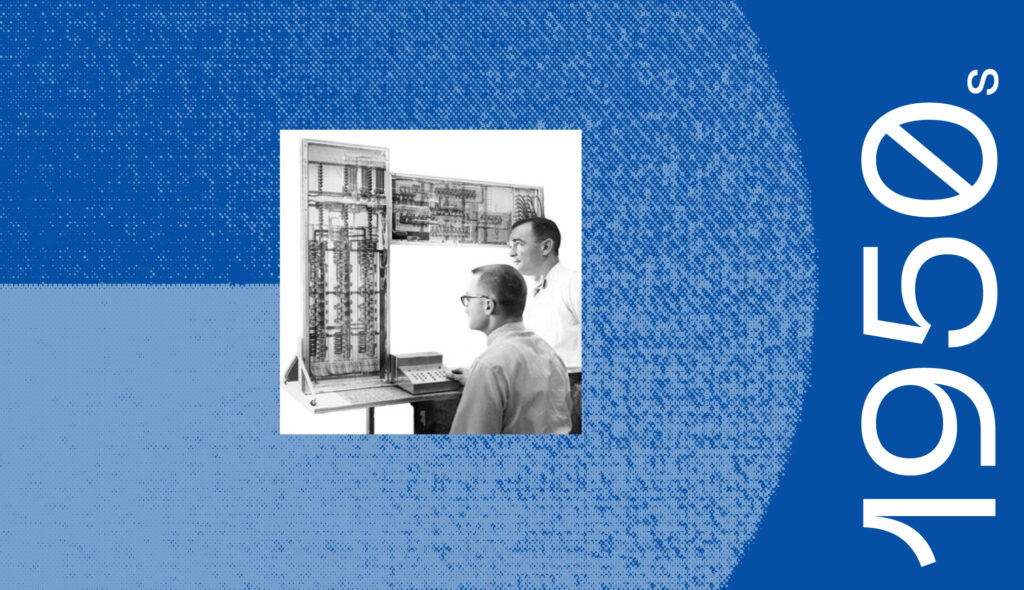
In computing, multi-aperture devices (MADs) are magnetic ferrite elements of complex shape, interconnected solely by wound copper wire. In the 1950s, SRI began developing computer circuitry with MADs. The goal was to achieve complete logic capability by controlling the direction of bit flow in adaptations of magnetic ferrite memory cores. Unlike vacuum tubes and transistors, these logic circuits were essentially indestructible and did not draw power when not in use.
Although the advent of the integrated circuit and the silicon chip prevented all-magnetic logic from occupying a permanent niche in the computer market, MAD-like units may yet be needed for long space flights or remote installations where maintenance and replacement are difficult.
SRI introduced the basic all-magnetic logic approach at the Fall Joint Computer Conference in 1959. Two years later, an SRI magnetics group demonstrated an Air Force-funded multiaperture logic system that was the world’s first, and only, all-magnetic computer. SRI’s technology was later commercialized by Accelerated Memory Production.